
Guide
Remedial massage or physio: which do I need?
The short answer
If you've had a new injury, a fall, pain you can't explain, or symptoms like numbness or weakness, start with a physio or GP, who can diagnose and rule out anything serious. For muscle tightness, ongoing aches and restricted movement that has already been checked, remedial massage is often the right next step. Many people use both.
By Lauren Schoenauer Remedial massage therapist · Accredited Member & Fellow, Australian Traditional Medicine Society · Diploma of Remedial Massage · 20+ years in clinical practice Updated 15 November 2026 · Tewantin, Noosa
What does a physio do?
Physiotherapists are registered health practitioners. A physio can assess and diagnose an injury, decide whether you need further tests, and build a rehabilitation program, usually centred on exercise and retraining how you move. If you've just rolled an ankle on the walk around Noosa National Park, are recovering from surgery, or have pain that started suddenly and you don't know why, a physio (or your GP) is the right first stop.
Physios also use hands-on treatment, but in many clinics the appointment time goes mostly on assessment, exercises and progress checks. That's not a criticism. It's what they're trained for, and it's what a fresh injury usually needs.
What does remedial massage do?
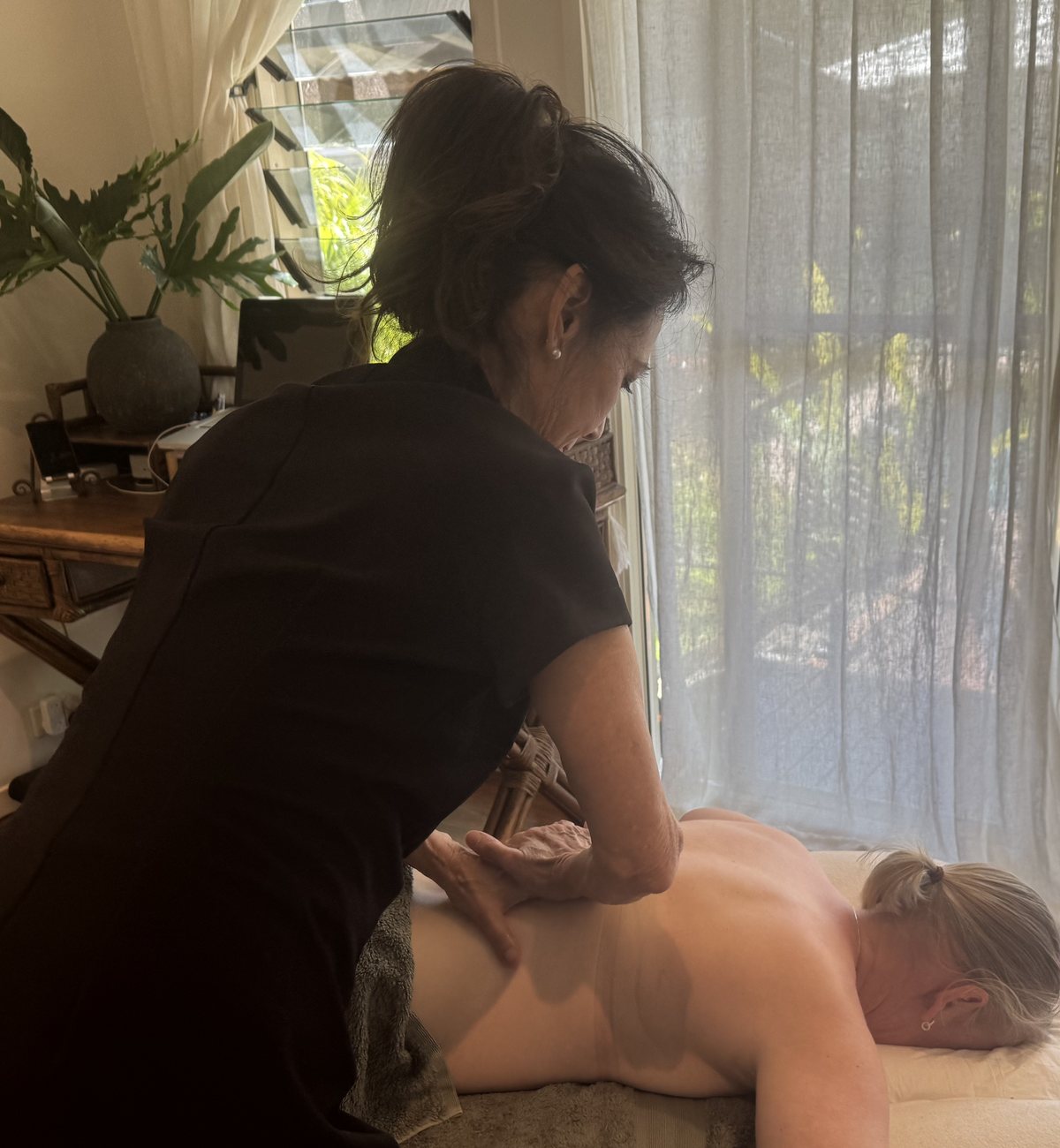
Remedial massage is hands-on treatment of muscle and connective tissue, aimed at a specific problem. Every treatment I give starts with assessment: how you move, where the restriction is, and how your body is compensating. Then I treat the tissues that are causing the trouble, using deep tissue work, trigger point therapy or PNF stretching where your body needs it.
What remedial massage doesn't do is diagnose medical conditions. My job is to work out which muscles and soft tissues are involved, treat them properly and tell you honestly whether massage is likely to help. If I don't think it's the right treatment for you, I'll say so and point you to someone who can help.
It's also worth knowing that in Australia "remedial massage therapist" isn't a protected title, so anyone can use it. I hold a nationally recognised Diploma of Remedial Massage and I'm an Accredited Member and Fellow of the Australian Traditional Medicine Society, renewed every year against current training, first aid and insurance. Whoever you see, it's worth asking about their accreditation.
Which should I see first?
A simple way to decide:
Start with a physio or GP if:
- it's a new injury with swelling, bruising, or you can't put weight on it
- you've had a fall, a car accident or a hard knock
- you're recovering from surgery or a fracture
- you have numbness, pins and needles or weakness in an arm or leg
- the pain is getting steadily worse, or you simply don't know what's causing it
Remedial massage is often a good fit if:
- your neck and shoulders are tight from desk work, driving or looking down at a phone
- your back aches after gardening, lifting or a long day on your feet
- you're training for something (a run, a paddle, a season of golf or cycling around the hinterland) and want to recover well
- you have headaches that seem to start in your neck, once a GP has checked them
- an old injury has healed but the area still feels stiff or restricted
Can I see a physio and a remedial massage therapist at the same time?
Yes, and for many people that's the best arrangement. A physio might give you a set of exercises to rebuild strength and control, while massage eases the tight, overworked tissue that makes those exercises hard to do. The two approaches complement each other rather than compete.
If you're seeing a physio, chiro or GP, I'm happy to work alongside them and share treatment notes with your consent. Part of my own training was physiotherapy-led: The Key Approach, Module 2, at Edgecliff Physiotherapy Sports & Spinal Centre, which covered spino-pelvic movement control and pain. It shapes how I assess back and hip problems, and it means I speak the same language as the physios my clients see.
Do I need a referral for remedial massage?
No. You can book directly with me online. Remedial massage is often claimable on private health extras cover, depending on your fund and your level of cover, and I provide an itemised receipt you can claim with. Physiotherapy usually sits under extras too, sometimes with its own limit. It's worth checking both with your fund. There's more detail in my guide to claiming remedial massage on your health fund.
What if I'm still not sure?
Book a 30-minute or 45-minute appointment and tell me what's going on. I'll assess it, explain what I think is happening in the soft tissue, and be straight with you about whether massage is the right treatment. If something needs a GP or physio first, I'll tell you, and you'll leave knowing who to see next. My studio is in Tewantin, a few minutes from Noosaville, so it's an easy trip from most of the Noosa area.
Book with Lauren in Tewantin
Every treatment starts with assessment, and you see me every visit. Private studio at 12 Cambridge Court, Tewantin, with off-street parking at the door. No referral needed.
30 min $85 · 45 min $105 · 60 min $125 · 90 min $175 · health fund rebates may be available depending on your fund and extras cover
View available appointments