
Guide
Neck and shoulder pain from desk work: what helps?
The short answer
Neck and shoulder tightness from desk work usually comes from holding one position for hours, not just from bad posture. Changing position often, setting your screen at eye height and moving regularly help most. Remedial massage can ease the tight muscles and trigger points that build up, including those that can send pain into your head.
By Lauren Schoenauer Remedial massage therapist · Accredited Member & Fellow, Australian Traditional Medicine Society · Diploma of Remedial Massage · 20+ years in clinical practice Updated 15 November 2026 · Tewantin, Noosa
Is bad posture really the problem?
Partly, but probably not the way you think. There's no single perfect posture that protects your neck all day. The bigger issue is staying in any position for too long. Muscles are built to move, and holding your head forward over a laptop for three hours keeps the same muscles working without a break. Your next posture is your best posture.
The muscles that usually complain are the ones across the tops of your shoulders, up the back and sides of your neck, between your shoulder blades and across the front of your chest. When they've been working overtime, they feel tight, achy and tender to touch, and they can start to limit how far you can turn your head.
What desk set-up changes help?
Small changes make a real difference, and most cost nothing:
- Screen at eye height. The top of the screen should be roughly level with your eyes, about an arm's length away. If you work on a laptop, raise it on a stand or a pile of books and use a separate keyboard and mouse.
- Elbows by your sides. Keyboard and mouse close enough that you're not reaching forward.
- Feet supported. Flat on the floor or a footrest, with your back supported by the chair.
- Phone up, not down. Lift your phone towards eye level rather than dropping your head to it, and use a headset for long calls instead of tucking the phone into your shoulder.
- Light from the side. Glare on the screen makes people lean in and squint.
If you work from home, it's worth looking honestly at where the work actually happens. A laptop on the kitchen bench, the couch or the outdoor table on the verandah is lovely on a Sunshine Coast morning, and hard on a neck by the afternoon.
How often should I move?
Aim to change position or get up every 30 to 60 minutes, even for a minute or two. Refill your water, take calls standing, walk to the letterbox. A few gentle movements through the day help too, as long as they don't increase your pain:
- slowly turning your head to look over each shoulder
- gently drawing your chin back, as if making a double chin, then relaxing
- rolling your shoulders backwards a few times
- squeezing your shoulder blades together and down, then letting go
How does remedial massage help a desk neck?
Every treatment starts with assessment: how your neck and shoulders move, where the restriction is, and how your body is compensating. Desk necks are rarely just a neck problem. The upper back, the chest and the way you sit all play a part.
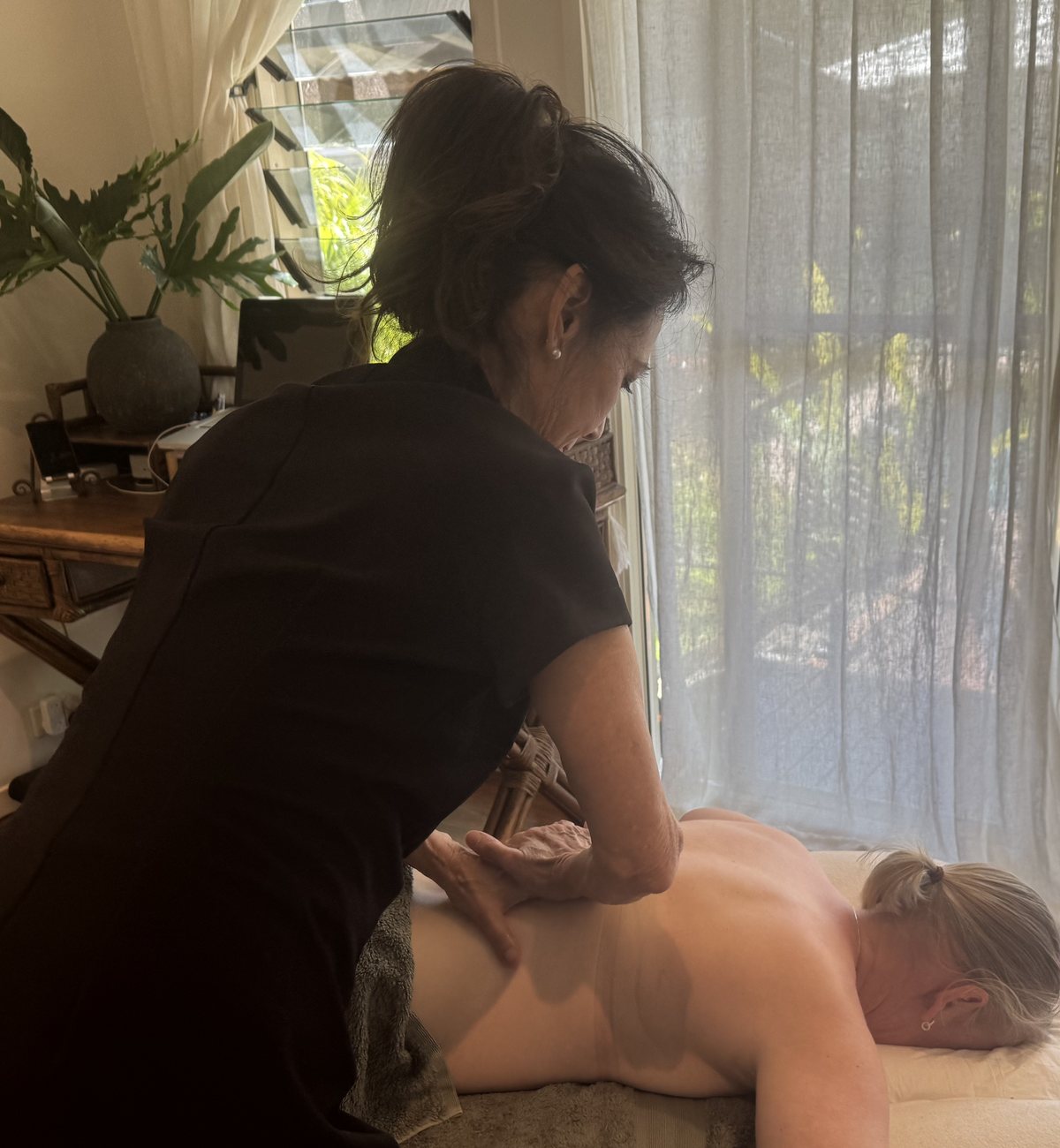
Treatment might include deep tissue work through the shoulders and upper back, trigger point therapy for the tender, knotted spots, and assisted stretching to help the neck and chest open up. Firm doesn't have to mean painful. I work with your breath and feedback. Most people with a recent flare-up respond within three to four sessions. A 30-minute appointment ($85) suits one problem area, such as the neck and shoulders, and 45 minutes ($105) gives time for one to two areas with assessment.
Can neck tension cause headaches?
It can. Trigger points, hyper-irritable spots in tight muscles, can refer pain away from where they sit. Trigger points in the neck and shoulders are a common source of headaches that seem to start at the base of the skull or wrap around the side of the head. Locating and releasing those trigger points is a regular part of my work.
That said, headaches have many causes. If your headaches are new, severe, getting worse or come with other symptoms, see your GP before booking a massage. Once anything serious has been ruled out, remedial massage can be a helpful part of managing neck-related headaches.
What else helps?
- Get outside. A walk at lunchtime gets the whole body moving and gives your eyes a break from the screen.
- Watch the evening scroll. Many desk necks get a second shift on the phone or tablet at night.
- Check your pillow. If you wake up stiff, your pillow may be too high or too flat for how you sleep.
- Notice your shoulders. When you're busy or stressed, check whether they've crept up towards your ears, and let them drop.
Because I'm a sole practitioner, you'll see me at every visit. I'll get to know your neck, your desk and your deadlines, and we can plan treatment around the busy times rather than waiting for things to flare.
Book with Lauren in Tewantin
Every treatment starts with assessment, and you see me every visit. Private studio at 12 Cambridge Court, Tewantin, with off-street parking at the door. No referral needed.
30 min $85 · 45 min $105 · 60 min $125 · 90 min $175 · health fund rebates may be available depending on your fund and extras cover
View available appointments